
July 21, 2026
Everyone Needs a Third Place, and Most of Us Lost Ours
Ray Oldenburg called them third places: the cafes, pubs, and counters where community actually forms. Most of us lost ours. Here is how to build one on purpose.
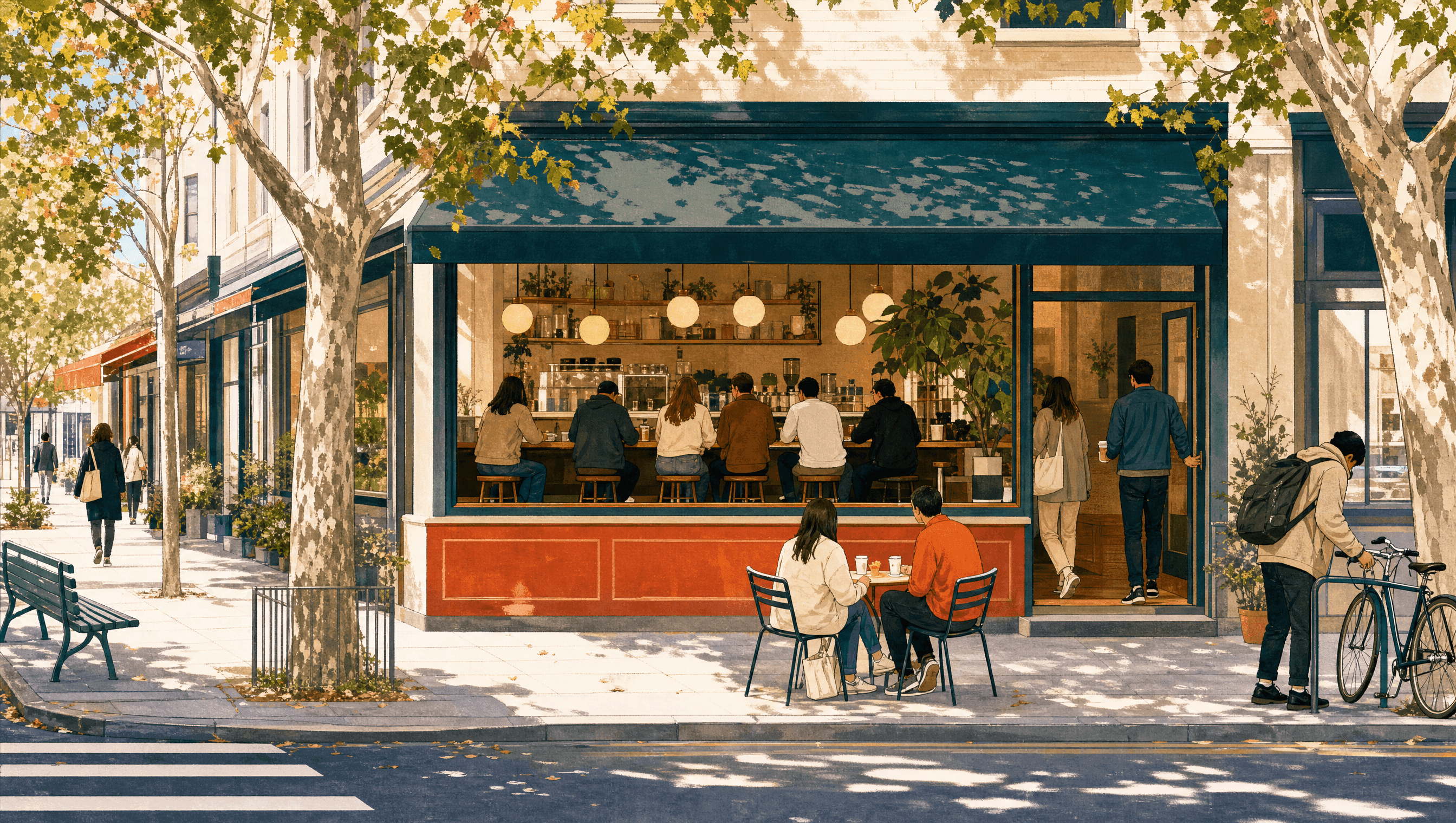
In 1989, a sociologist named Ray Oldenburg gave a name to a place you already miss. In The Great Good Place, he argued that a good life needs three locations. Home is the first place. Work is the second. And then there is the third place: somewhere informal and public where you show up regularly and are known. The cafe where they start your order when you walk in. The barbershop. The diner counter, the chess tables in the park, the pub where the same friendly argument has been running since 1997.
Oldenburg's point was not sentimental. Third places do specific social work. They are neutral ground, where nobody has to host and nobody is a guest. They flatten status: the regulars might include a retired judge and a guy who fixes scooters, and the scooters come up more. Conversation is the main activity. The mood is playful. And they run on regulars, people who keep coming back until coming back is the whole point.
Where did they go?
Most of us can name our third place from twenty years ago more easily than our third place now. The causes are boring and powerful: longer commutes, suburbs designed around cars, the slow replacement of shared public space with private everything. In Bowling Alone, Robert Putnam documented the collapse of exactly this kind of recurring, low-stakes civic life. Then the phone arrived, offering the feeling of a crowded room with none of the regulars, and we took the deal.
The cost is quiet but real. Third places are where acquaintances become friends and where you learn the names of people who are not like you. Sociologist Mark Granovetter famously showed that our weak ties, the people we see a little and know a bit, carry enormous weight in our lives. Third places are weak-tie factories. Lose them, and every social need has to be carried by your five closest people, which is too much weight for any five people.
You cannot find a third place. You have to build one.
The good news is that a third place is not a venue, it is a behavior. Any table becomes a third place when the same people keep showing up at it on purpose.
- Pick somewhere you can reach in ten minutes. Distance kills regulars.
- Go at the same time on the same day, every week. Ritual beats enthusiasm.
- Learn one staff member's name per visit. Names are the bricks.
- Bring one person. Not a group, one person. Groups plan; pairs repeat.
- Protect the recurrence. The point is the standing date, not the quality of the nachos.
Community is not a place you move to. It is a table you keep.
None of this requires a charming historic pub. It requires a Tuesday. If you miss having somewhere to go where people know you, the honest answer is that nobody is coming to open that place for you. You open it yourself, by arriving again and again until the arriving becomes the place.
A standing promise of time works exactly the same way. Coffee every Thursday, the first-Friday walk, the monthly dinner nobody is allowed to reschedule. That is a third place you carry with you, built out of kept hours instead of brick.