
July 21, 2026
The Family Dinner Is the Most Underrated Ritual in the World
One of the most consistent findings in family research is hiding in plain sight at the dinner table. Here is what shared meals actually do, and why the bar is lower than you think.
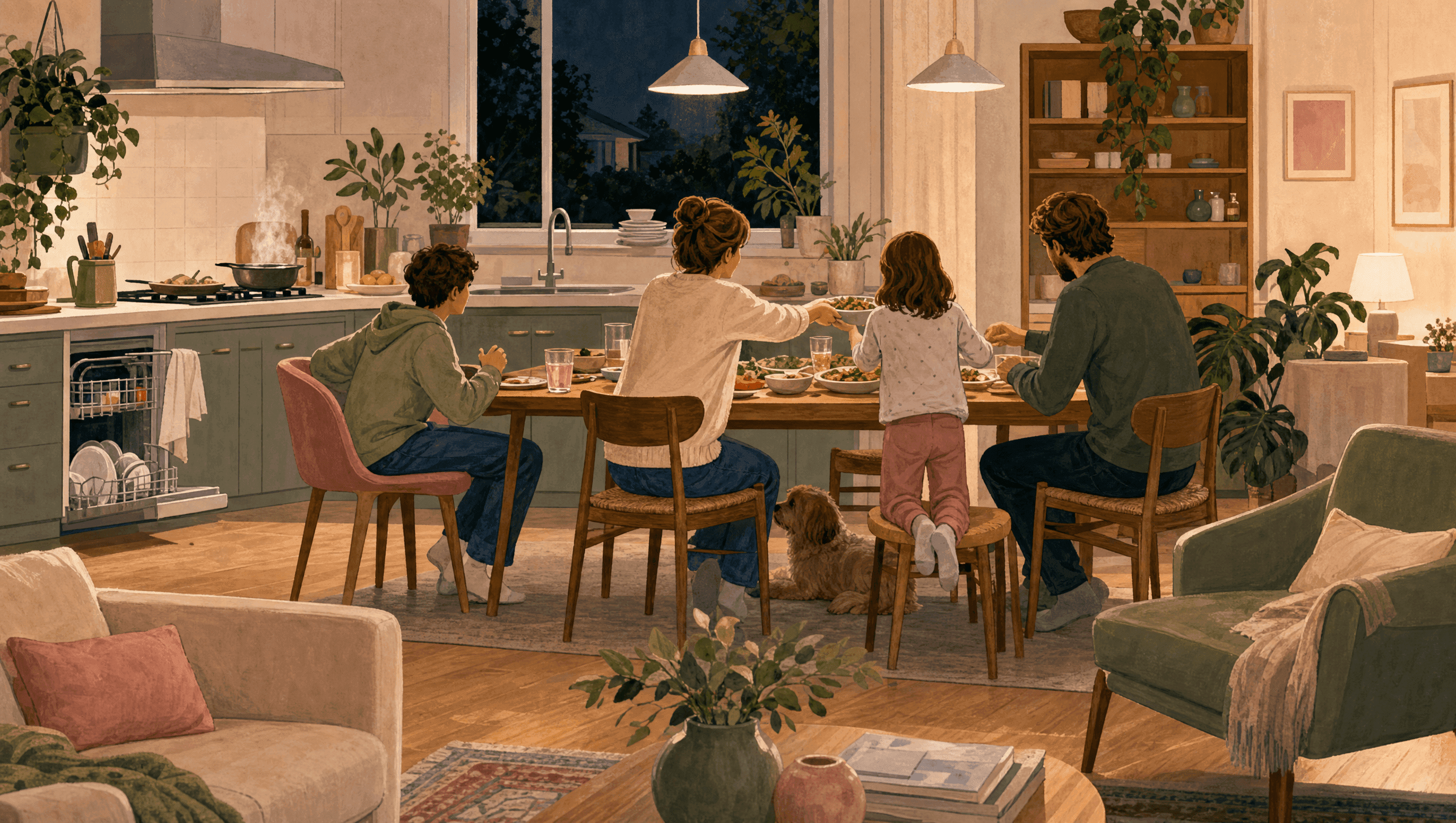
Ask a hundred parents what protects a kid while they grow up and you will hear about good schools, safe streets, the right friends, maybe a sport or an instrument. Almost nobody says dinner. Which is strange, because one of the most consistent findings in family research is almost embarrassingly simple: kids who regularly eat dinner with their families tend to do better.
For years, researchers at the National Center on Addiction and Substance Abuse at Columbia University surveyed thousands of teenagers and their parents about one humble habit, the family dinner. Again and again the same pattern showed up. Teens who ate dinner with their families most nights reported closer relationships with their parents, and they were meaningfully less likely to smoke, drink, or use drugs than teens who rarely did. Researchers who study young children have found their own version of the pattern: dinner table conversation is some of the richest language a child hears all day, full of stories, explanations, and words that simply do not come up anywhere else.
One detail from those surveys is easy to miss. When researchers asked teenagers how often they would like to eat with their parents, the teens wanted it more often than their parents assumed. The appetite for the ritual was there on both sides of the table. What was usually missing was not desire, but a plan.
Why a Table Beats a Couch
There is nothing magical about food. The magic is in what a shared meal forces into existence. A table makes people sit still, face each other, at a predictable time, with no agenda except being together. It is repetition plus attention, and those two ingredients turn out to be the recipe for trust.
This is why some researchers say the dinner table quietly outperforms more dramatic interventions. Therapy matters, obviously, and plenty of families need it. But therapy is an hour a week, and it usually starts after something has gone wrong. Dinner is prevention. It happens hundreds of times a year, in small, unremarkable doses, and each dose says the same thing: you belong here, and I will show up again tomorrow.
A family dinner is not an event. It is a promise that keeps getting renewed.
So What Do We Do With This?
The bar is lower than you think. The research was never about elaborate meals or perfect manners. It was about frequency and presence. A Tuesday night plate of pasta counts exactly as much as a Sunday roast.
- Pick two or three nights a week and protect them like appointments.
- Keep the food simple enough that cooking it never becomes the excuse to skip.
- Give everyone a small role: setting the table, choosing the music, telling one story from the day.
- Ban nothing except absence. The ritual works because it is ordinary, not because it is strict.
The best gift you can hand a family is not a thing at all. It is a chair that stays pulled out, at a time everyone can count on. Put it on the calendar, keep it like a promise, and let the years do the rest.