
July 21, 2026
Why Singing Together (or Doing Anything in Sync) Bonds Us
Moving in sync with other people releases endorphins and builds trust faster than conversation ever could. The science of why shared rhythm is a shortcut to closeness.
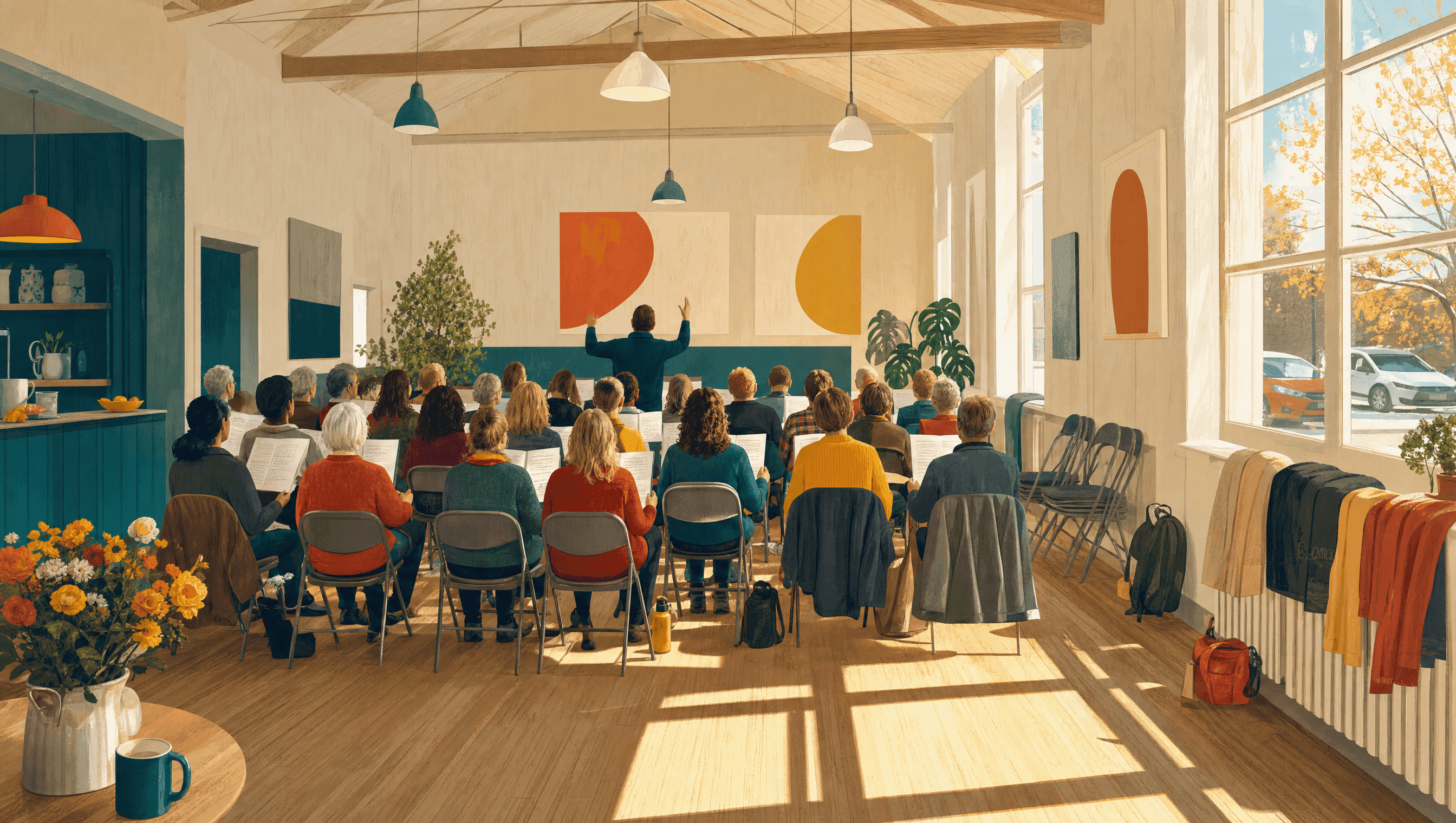
Think about the last time you felt an instant, almost irrational warmth toward a group of people you barely knew. There is a decent chance you were doing something in rhythm with them: singing at a concert, dancing at a wedding, chanting at a match, clapping in time. That glow is not sentimentality. It is chemistry, and researchers can measure it.
The rowing experiment
In a well-known study from Robin Dunbar's lab at the University of Oxford, researcher Emma Cohen had athletes work out on rowing machines, sometimes alone and sometimes in synchronized teams, at identical physical intensity. Afterward, she measured their pain thresholds, a standard proxy for endorphin release. The synchronized rowers showed significantly higher pain thresholds than those who had rowed alone at exactly the same effort. Same muscles, same exertion, same sweat. The only difference was moving in time with other people, and it produced an extra endorphin hit. Endorphins, Dunbar argues, are part of the brain's social glue, the warm chemistry behind laughter, music and bonding.
Faster than small talk
Follow-up work showed how quickly this scales. In a study published in Royal Society Open Science, Bronwyn Tarr, Jacques Launay and Dunbar followed adult education classes for seven months: some learning to sing together, others doing crafts or creative writing. All the groups ended up equally close by the end, but the singers bonded with their entire class dramatically faster, within the first month. The researchers called it the ice-breaker effect: singing together does in an hour what conversation-based groups need months to achieve.
And synchrony changes behavior, not just feelings. In experiments by Scott Wiltermuth and Chip Heath published in the journal Psychological Science, strangers who simply walked in step, or sang and moved in sync, afterward cooperated more in economic games, even when cooperating cost them money. Moving together made people measurably more trusting and more generous toward each other.
Historians noticed this long before psychologists did. In his book Keeping Together in Time, historian William McNeill argued that rhythmic group movement, soldiers drilling, villagers dancing, worshippers swaying, creates what he called muscular bonding, a euphoric solidarity that has held human groups together for millennia. Armies, religions and dance floors all stumbled onto the same trick.
So what do we do with this?
If you want to feel closer to someone, do not just talk. Do something in sync. Cook side by side, timing the same sauce. Take a dance class, however badly. Go to a gig and clap until your hands hurt. Row, run or walk together, since even matching strides appears to count. Shared rhythm gets you to closeness by a side door, skipping the awkward early stage of getting to know each other entirely.
It also explains something most of us have felt but never named: the experiences we remember most fondly are rarely conversations. They are the nights we sang, danced, cooked, built or played something together.
That is worth remembering when we promise someone our time. The richest promises are not let's catch up sometime. They are let's do something: make pasta from scratch, learn salsa, sing very badly at karaoke. Your endorphins, and the relationship, will do the rest.